
- Questo evento è passato.
How to harness irrigation-groundwater linkages to adapt to climate changes
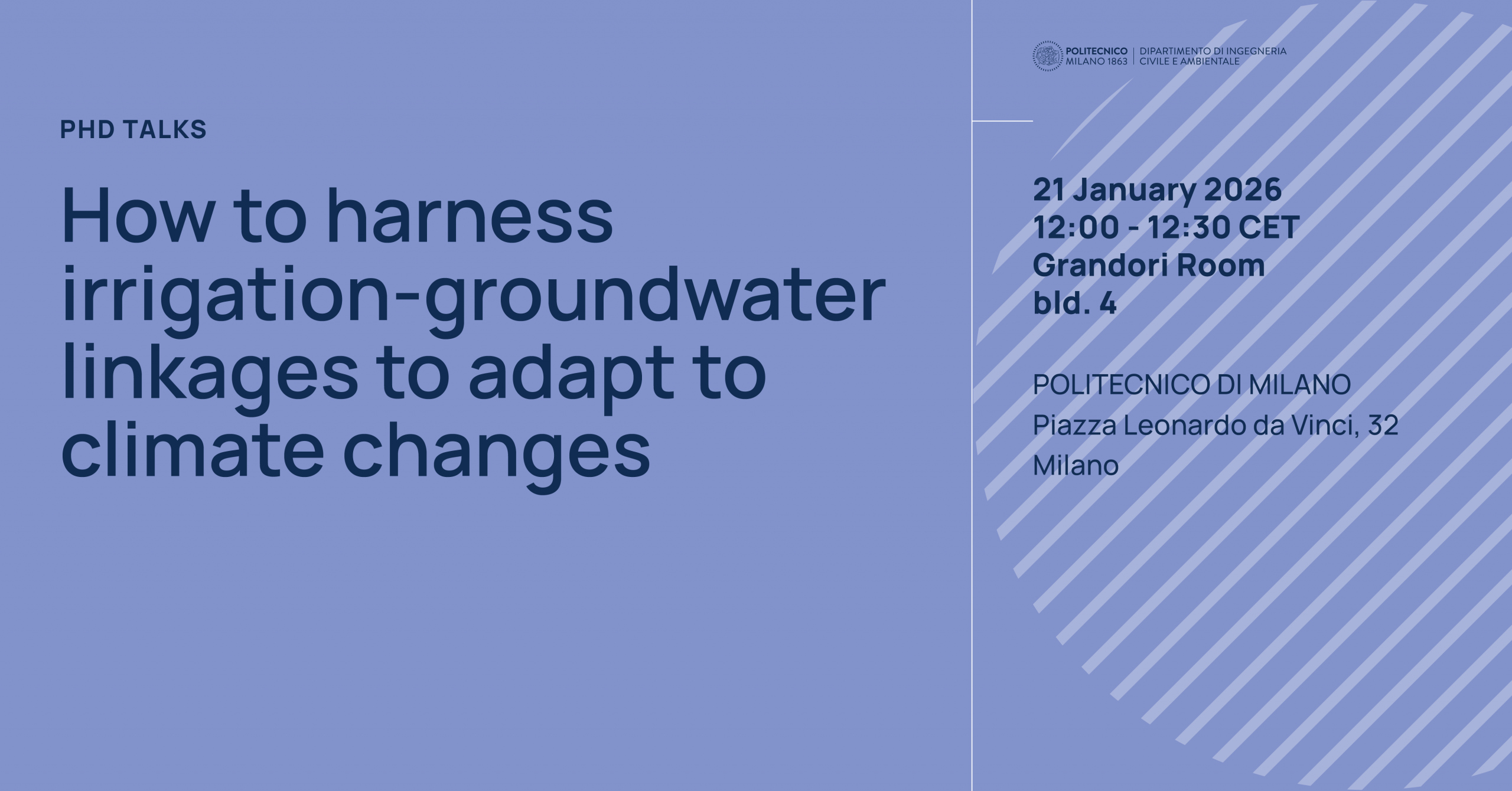
The next appointment in the PhDTalks seminar series will take place on Wednesday, January 21st, 2026, in Grandori Room (Building 4), from 12:00 to 13:00 CET.
PhDTalks is a series of seminars and discussions among PhD candidates. The events aim to provide a space for networking among doctoral students and for engaging with the many projects developed within our department.
The speaker Paolo Colombo will deliver a seminar entitled “How to harness irrigation-groundwater linkages to adapt to climate changes”
At the end of the event, a light refreshment will be offered, sponsored by the department.
The seminar will also be accessible online at the following link.
Abstract
Groundwater is crucial in sustaining life, worldwide depletion has been observed, linked to climate changes and human consumption. This leads to risks for the whole water system. The Po plain makes no exception. It does however offer some solutions: the historical irrigation practices foster aquifer recharge, opening a path towards possible adaptation. The presentation will follow the path of my PhD, answering the questions: how will groundwater respond to future climate changes? Can we “hit two pigeons with a stone” and safeguarding heritage irrigation canals while adapting to climate change? What do we need to consider? The answers have come through field tests in cooperation with farmers and an irrigation consortium, groundwater monitoring and numerical modeling.
Speaker’s Bio
Currently a PhD student at Politecnico di Milano, Paolo Colombo graduated in Environmental and Land Planning Engineering with a focus on water management and a thesis on human impacts on hydrological droughts. Keen in finding ways to bring communities together and fostering cooperation on water and drought matters, he is now leading a pilot project to harness the link between heritage irrigation canals and groundwater, to foster adaptation to droughts and climate change. In his research he utilizes time series analysis, numerical modelling and data-driven modeling to test stressors to the water system, some of which have been developed during a visiting period at Vrije Universiteit Amsterdam in 2025. He loves biking and the freedom it enables.